


November 4, 2026
“His heart, his hand, and his purse were always open.”
— Mark Twain
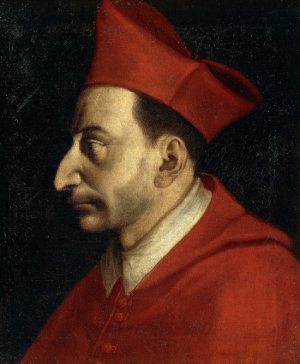
Born into privilege, he is often depicted with a rope around his neck, his bare feet bloody, and a cross over his shoulder … in memory of the penitential processions the archbishop led through Milan during a plague that ravaged the city in 1576.
When others fled, the saint stayed and used his inheritance to feed starving people. At one point, he even sold his household furniture to buy them food.
Today we celebrate the feast day of this young noble who shunned wealth, died at 46 in sackcloth, clutching a picture of Christ crucified. In less than 25 years, he had become a major reformer of the Church during the Counter Reformation. He established seminaries for the education of poor boys entering the priesthood, initiated Sunday school programs for the laity and founded the Confraternity of Christian Doctrine.
As a young lawyer, Charles was enlisted by his uncle Pope Pius IV to be a papal diplomat and oversee Vatican affairs. He supervised religious orders and was active during the last years of the Council of Trent, the Church’s 19th ecumenical council, which sought to reform the Church and clarify Catholic teaching in light of the Protestant Reformation.
The Council also established a regulation that required each diocese to have a seminary to train priests, particularly poor boys who had no education, with classes in Latin, scripture, liturgy, doctrine and accounting.
During the Council, Charles was ordained a priest and consecrated as archbishop of Milan at 25, and months later made a cardinal.
After the death of his older brother, Charles’ family urged him to leave his clerical duties, marry and start a family to carry on the family name, but he chose to remain a cleric. He renounced his inheritance and told his father to give the money to the poor.
The rigors of his work affected his health and in 1584, he became ill and died. Charles Borromeo was canonized by Pope Paul V in 1610.
His life was so inspiring that even author Mark Twain, a strident skeptic of religion, was fascinated by the saint, and in “The Innocents Abroad,” Twain recounts his visit to St. Charles’ tomb at the Milan Cathedral and says, “His heart, his hand, and his purse were always open.”
©J Pisani
***
Sign Up for Healing Journey Messages
Receive a daily message to your email address.