


March 1, 2026
The Loss of My Mentor
By Stephen Herman, M.D.
Mentor, in Greek mythology, was a friend of Odysseus. Mentor cared for and educated his son, Telemachus, while his father was away. Mentor was a coach and a guide. At times, he found it necessary to admonish Telemachus for the boy’s behavior and lack of interest in what he was being taught.
“Doctor” was originally used by the Roman Catholic Church to describe a person who earned the highest of academic degrees. “Doctor” or “wise old man” [or woman] has its roots in old Russian. The Latin word “docent” described a college or university teacher. In non-formal language, he or she was a seasoned professional. Now, the word describes a teacher and/or a museum guide.
My mentor was Diane Schetky, M.D., who, with Elissa Benedek M.D., was a pioneer in forensic child and adult psychiatry. She had been my psychotherapy supervisor at the Yale Child Study Center. How lucky was that!
 Every Christmas holiday season, Diane would send a letter to colleagues, friends and relatives. She wrote about what she and her family had accomplished during the year. The letters were enjoyable to read, filled with photographs of their activities.
In her last communication, she wrote that she had been diagnosed with Alzheimer’s Disorder: “I know this is one battle I will not win.” Diane died on August 25, 2023 in Maine, where she lived and practiced for many years. I wrote to her email, hoping that a relative would see it and respond. No one did.
I am grateful to her for many reasons. She generously brought me into her field, inviting me to present at conferences. Soon, I flew the nest, becoming Board Certified in Forensic Psychiatry. Diane and I continued to talk, share stores and work together. We never lost touch until the sad finality. I miss her as my quotidian friend and colleague.
Diane was humble yet very accomplished in other fields. She was an artist, a musician, a photographer and wrote five books of poetry. She was in a professional choir. She knew she wanted to be a doctor after having several life-threatening diseases. Neither of her parents encouraged her to have a career in medicine. But they did not discourage her. Having met them, I know they were extremely proud.
Her undergraduate education was wide-ranging. She was rejected by several medical schools because admission officers couldn’t understand why a potential physician would also like art and music. But the Dean at the Western Reserve School of Medicine in Cleveland understood. After her medical training, she moved back to Connecticut and finally, Maine. She was an unpretentious doctor in an area desperate for outstanding medicine. Diane enjoyed her clinical work but still had time to create programs for inmates in jails and prisons. She educated correctional officers about inmates being at risk for suicide. In interpersonal relationships, she was a virtuoso.
She came from a very wealthy family. Her father, Andrew Heiskell, was the chairman of Life magazine and CEO of Time magazine. He created People magazine. He was very subdued about his affluence. This was Diane as well. Most people who knew her had no idea about her financial background. In addition, they would have had to read her CV to see all her professional and personal accomplishments.
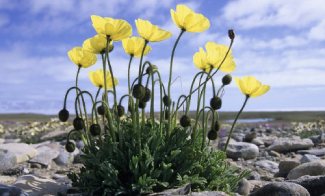
She traveled all over the world, including four trips to the Arctic. Her email address was arcticpoppy@….com. I loved sending mail to that address. I didn’t understand how she concocted it. Now, I know it’s a generic term for flowers of varying colors uniquely growing in some of the coldest places on Earth. Each flower has its own genus and species; together they create a field of many colors. This was my friend and mentor, Diane.
May she rest in peace.
***
Sign Up for Healing Journey Messages
Receive a daily message to your email address.