


September 26, 2026
The following is excerpted from a column that originally appeared in the Hearst Connecticut newspapers.
Many years ago when I was a young man, I put on a suit jacket, a white shirt and a necktie and went to work on the first day of my journalism career.
When I set foot in the Greenwich Time newsroom, typewriters were clacking, phones were ringing, and editors were yelling for copy, but instead of being inspired, I was terrified.
Just as I was about to reconsider my career choice and rush home to tell my father I wanted to be a carpenter, a diminutive woman who sat at the doorway walked over, smiled and asked if she could help me.
It was Arts Editor Dorothy Friedman, the only friendly face in the place, who showed me where to hang my coat and proceeded to give me a tour of the newsroom. It was a short tour, but the memory of that simple act of kindness lasted a lifetime.
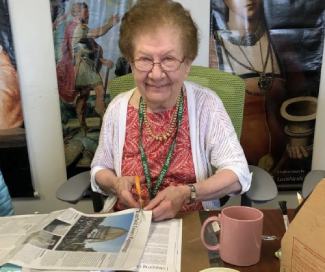 Dorothy’s desk was at the door to the newsroom, so she functioned as the de facto gate keeper, who greeted everyone and anyone who wandered in.
Greenwich Time had an arts page four days a week, so she edited and wrote stories, along with a weekly column. She was always at her desk — typing, interviewing, eating lunch or sitting with the family members of someone who died. You see, she had another important role: She was the obituary editor.
This was back before newspapers started charging for obituaries, back when the death of a person, regardless of their station in society, was considered worthy of a story because everyone, rich or poor and in between, had a life worth telling.
I left Greenwich Time and went to work at other newspapers, but eventually returned. The day I walked through the door again, Dorothy was at her desk in the same spot she had been years before.
On September 26, 2025, a year ago, my longtime friend and former colleague, Dorothy Naveen Friedman, died at 95 years old. She would be proud of whoever wrote her obituary. It was a heartfelt tribute and gave details of a life well-lived.
Her beloved husband Sidney Friedman predeceased her in 1990, and she is survived by her daughter Marilyn, her son-in-law Stuart Adelberg, and her grandson Jesse Adelberg and his fiancée, Julia Monaco of Denver.
As the rabbi prayed the Mourner’s Kaddish at her service, and Marilyn recalled her mother with tears and laughter, a flood of memories came back to me.
It’s strange that what we remember most about our friends and family members isn’t their worldly achievements, but the simple acts of kindness. My first memory was of that autumn morning when I walked into the newsroom and confronted a crowd of nameless faces — and one friendly face, who smiled and took the time to show me where to hang my coat.
I also thought of those grieving family members who sat by her desk because someone they loved had died, while Dorothy took notes and recounted their lives in an obituary, so their legacy could be remembered.
They say when we die, we meet the people who’ve been kind to us and the people we’ve been kind to. I can’t help but think there was an immense crowd welcoming Dorothy — not just the arts community, but also people she showed compassion during their grief. I also have a hunch, maybe it’s a hope, that someday when we meet again, she’ll be at the doorway when I arrive.
©Joe Pisani
***
Sign Up for Healing Journey Messages
Receive a daily message to your email address.